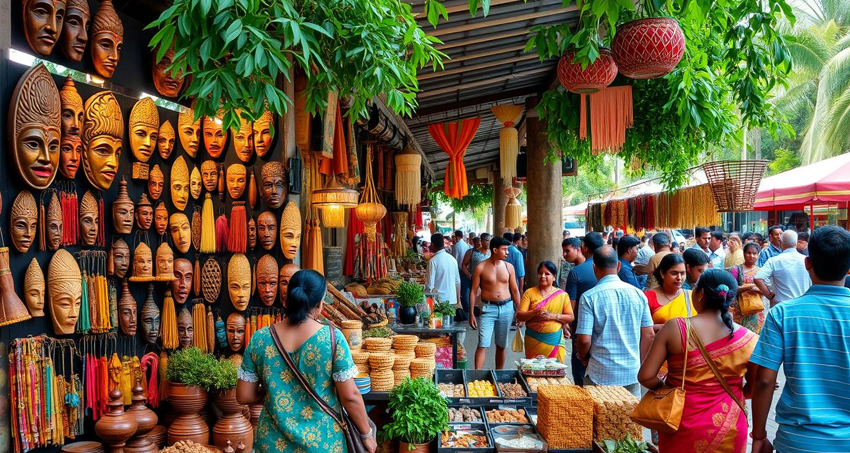
Travel is most rewarding when it benefits the local communities you visit. In Sri Lanka, moving away from mass-produced trinkets in favor of handcrafted goods allows you to take home a piece of the island’s soul while supporting traditional livelihoods.
5 Local Artisan Choices at a Glance
| Artisan / craft | Where to find it | What to look for | Why it’s sustainable |
|---|---|---|---|
| 1. Handloom textiles | Small villages across the island | Sarís, sarongs, table linens; natural dyes | Women use wooden looms; craft passed down through generations |
| 2. Raksha masks | Ambalangoda | Masks carved from light kaduru wood, hand-painted | Symbols of Sri Lankan folklore; traditional carving & painting |
| 3. Handcrafted ceramics | Hill Country; local pottery co-ops | Pots, tableware, decorative pieces | Ancient techniques preserved; revenue stays with artisans |
| 4. Reed-ware | Hill Country | Baskets, mats, items from dried grasses | Natural materials; supports traditional weaving |
| 5. Organic spices | Small-scale organic spice gardens | Buy direct from farmers, not supermarket chains | Superior quality; revenue goes directly to farmers |
Handloom Textiles
One of the most iconic sustainable choices is handloom textiles. In small villages across the island, women use wooden looms to create vibrant saris, sarongs, and table linens.
- Often dyed with natural pigments.
- Represent a craft passed down through generations.
- Support village-based weavers and their families.
Raksha Masks in Ambalangoda
Look for traditional masks carved from light kaduru wood in Ambalangoda. These "Raksha" masks are hand-painted with intricate designs and serve as powerful symbols of Sri Lankan folklore.
- Carved by hand from kaduru wood.
- Hand-painted with intricate designs.
- Linked to traditional dance, ritual, and storytelling.
Hill Country: Ceramics & Reed-ware
For those visiting the Hill Country, handcrafted ceramics and reed-ware (made from dried grasses) are excellent choices. Supporting local pottery co-ops ensures that ancient techniques aren’t lost to industrialization.
- Ceramics from local pottery co-ops.
- Reed-ware: baskets, mats, and items from dried grasses.
- Revenue stays within the community and preserves skills.
Spices: Pure Local Flavor
Consider purchasing spices directly from small-scale organic spice gardens rather than supermarket chains. Not only is the quality superior, but the revenue goes directly to the farmers.
- Buy from organic spice gardens when possible.
- Revenue goes directly to farmers.
- Fresher, more authentic flavor than mass-market options.
Your Souvenirs Become Stories
By choosing "Pure Local Flavor" in your shopping habits, you contribute to a circular economy that preserves Sri Lanka’s cultural heritage for future generations. Your souvenirs become more than just objects; they become stories of the people you met along the way. For itineraries that include visits to artisan villages and ethical shopping stops, DM Tours can help you connect with local makers and take home memories that matter.